
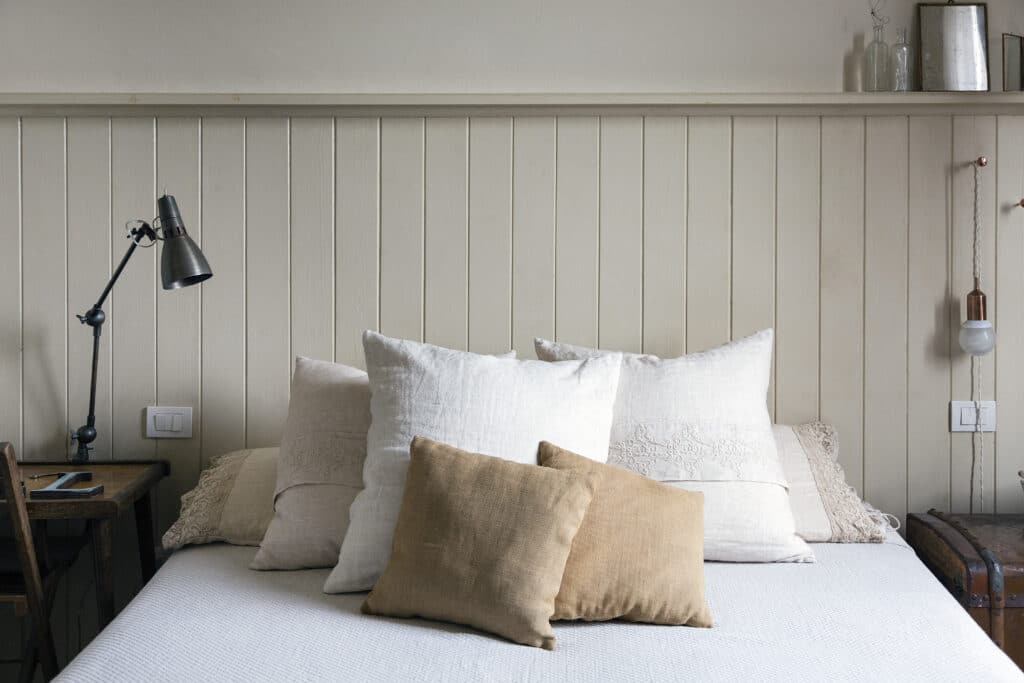
Packing pillows is surely the easiest of packing tasks, but it actually requires thought, planning and care. We tend to turn our attention to breakables when packing and give little thought to pillows because they’re soft.
However, a pillow is also easy to damage in the turmoil of a move, especially if you have decorative or ornamental pillows with fine fabric or decoration like beads or needlework. Let’s look at how to pack pillows so they arrive at your new home without a stitch out of place.
-
Declutter
Decluttering is a vital task when packing and moving house. In the case of pillows (and pillowcases), you’ll want to take a slightly different approach. Start by sorting your pillows into two groups: pillows you want to keep and pillows you don’t need anymore.
When decluttering, we usually sell, gift or dispose of unwanted items, but your pillows are superb packing materials, so the ones you don’t need anymore will save you money on other packing materials.
-
Using old pillows for packing
Old pillows make packing fragile items easier and offer good protection. Set your old pillows aside for packing other items. You can use them in the following ways:
- Large pillows, like the ones for bed, are great for protecting mirrors or artwork.
- Small pillows can be used as liners for the top and bottom of boxes with breakables. Use them for the bottoms of boxes before the tops. We explain why further on.
- You can use any pillow that has lost its puff as wrapping for the legs of tables or furniture to protect them against knocks.
-
Packing materials for the pillows you’re keeping
We assume that packing pillows is simply a matter of squeezing as many as we can into a box and taping it shut. This, in fact, is the wrong way to pack pillows and the easiest way to damage or ruin them. Packing pillows takes time, care and the right packing materials. You will need:
- Clean and dry pillowcases
- Breathable wrap
- Packing tape
-
Packing each pillow
Once you have your packing materials, wrap each pillow the following way for the best protection.
- Clean any dirt or dust from pillows with a dry brush or a vacuum cleaner with the brush attachment, not the bare nozzle, which could damage the fabric.
- Put the pillow into an appropriately sized pillowcase, not one that’s too small for the pillow and will compress it.
- Wrap the pillow with the breathable covering (there are breathable plastic wraps available). Don’t wrap it tightly or compress the pillow, as even over short periods, you can permanently alter the pillow’s shape.
- Secure the covering with packing tape.
-
Use these pillows as packing materials
By protecting the pillows you want to keep with careful wrapping, you can now use these pillows as packing materials. However, you can’t use them like your old pillows in situations where they will get crushed or compressed and damage their shape. Here’s where to use them.
- The top layer of cushioning for a box of breakables, where the pillow fits and fills the empty space with minimal compression.
- Inside the drawers of bedroom furniture. Pillows don’t add weight to furniture, drawers give them more protection, and the pillow helps to stop the drawer from moving in transit. It’s a win-win!
-
Unpacking pillows is high priority
Even wrapped in breathable coverings, pillows can develop unpleasant, musty odours if you leave them packed for a long period. Unpack your pillows as soon as you can and air them by placing them outside in full sunlight. This removes musty odours, and sunlight can kill pests like dust mites.
-
The old pillows and good karma
This is a rare case where you’ll do your decluttering after moving. Gather up all the old pillows you used for packing and dispose of them. Here’s a hot tip. Take a photo of the pillows, place a listing on the local page of social media sites and say they’re perfect for packing. You’ll help someone else to have a smoother move to their new home.