
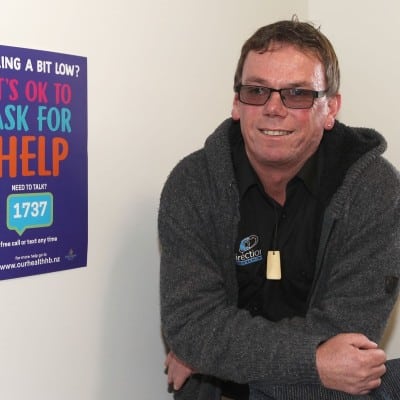
One Driver’s Message on Mental Health in the Transport Industry
Conroy Linehaul Driver Billy Harris is encouraging his workmates to check in on each other – and to make mental health an everyday conversation, not just something we talk about once a year.
Working in the transport industry comes with unique pressures. Long hours, time on the road, and extended periods away from home can all take a toll – not just physically, but mentally too. For many men, these challenges can be hard to talk about, making connection and support even more important.
Billy brings a unique perspective to the conversation. Alongside his work as a driver, he built a career in social work and holds a Master’s degree in Health Science.
“Even though I’m not working as a social worker anymore, I still use those skills every day,” Billy says. “When an offsider hops in the truck, it’s natural for me to check in – ask how they’re doing, how things are going. Those normal conversations can make a big difference.”
Through both his studies and his frontline experience, Billy saw firsthand how connection – or the lack of it – impacts men’s mental health.
“My research showed that simple, genuine engagement is one of the best ways to connect, especially with men. Programmes are helpful, but often it’s just about noticing people, asking questions, and taking an interest.”
During his time as a Clinical Leader at a youth centre, Billy was part of a suicide prevention and postvention governance group, where a clear pattern emerged.
“About three-quarters of the suicides we were seeing were young men. But when I looked at who was accessing support services, about 75% were female. That disconnect really stood out.”
This insight shaped his thesis, which explored why men are less likely to seek help – and what can be done to change that.
“One of the key messages is simple: it’s okay to ask for help.”
A Journey of Change
Billy’s path hasn’t been straightforward.
Growing up, he was often told he wasn’t smart. Those messages stuck, shaping how he saw himself and leading him to leave school at just 14.
“I heard ‘dumb’ and ‘stupid’ a lot as a kid. That becomes what you believe.”
He went straight into work, eventually building a career in driving. But a turning point came one Friday night while thinking about his young family.
“I was in the supermarket wondering what I was going to do. I wanted to be around more for my kids while they were still young.”
Soon after, he came across an opportunity to study social work.
“I thought, that’s it. That’s how I’m going to do it. We’d fostered children over the years, and I’d already seen how rewarding it was. Getting paid to help people just made sense.”
In a bold move, Billy sold his house and returned to study.
The transition wasn’t easy.
“My first writing assignment was rough. Because I left school so young, I didn’t know how to put a sentence together. I nearly gave up.”
But with persistence and support, things began to change.
“By my final year, I was getting A and A+ grades and even received an academic excellence award. A big part of it was proving to myself that I wasn’t what I’d always believed.”
Lessons from the Road
After experiencing burnout, Billy eventually returned to driving, bringing his experience and insights back with him.
“It felt like coming home. The culture is still strong – it’s a place where people care about each other.”
He believes that kind of environment plays a big role in wellbeing, especially in industries like transport.
“I once knocked down a power pole and caused a major outage. I expected a telling-off, but it was treated as a mistake – something to learn from, not something to punish. That kind of support makes you want to do better.”
One of the most important principles he carries with him is:
“The problem is the problem; the person is not the problem.”
“It helps you separate mistakes or challenges from who someone is. That’s important at work, but also in how we treat ourselves.”
Checking in Matters
For Billy, improving men’s health in the transport industry doesn’t require big interventions. It starts with small, everyday actions.
“Just take the time to ask someone how they’re going. Be genuine. That can go a long way.”
Looking after mental health on the road also links directly to safety. Fatigue, stress, and distraction can all increase risk behind the wheel.
“Certain times of day, like early morning and late afternoon, are more dangerous. Taking your time and staying aware is really important.”
A Simple Message
Billy’s journey – from leaving school early to earning a Master’s degree, from social work back to linehaul driving – has given him a powerful perspective on resilience, connection, and support.
His message to others in the transport industry is simple:
Check in. Start a conversation. And never be afraid to ask for help.
If you or someone you know is struggling with their mental health, free, confidential help is available 24/7. You don’t need to wait until things feel “serious enough” to reach out.
Immediate and Crisis Support
- Lifeline Australia – 13 11 14
24/7 crisis support and suicide prevention. - Suicide Call Back Service – 1300 659 467
Free counselling for people feeling suicidal or supporting someone else.
Depression, Anxiety & General Support
- https://www.beyondblue.org.au/
Call 1300 22 4636 (24/7) or webchat
Support for anxiety, depression and everyday mental health challenges. - https://www.mindspot.org.au/
Free online assessments and treatment for anxiety, stress and depression. - https://www.reachout.com/
Online tools, forums and practical advice for managing mental health.